
Havering and west Essex are a mix of 1930s plain tiles, post-war interlocking concrete, and the occasional slate roof that still earns its keep. The right repair matches what is there. A bright new tile in a weathered slope looks worse than the crack it replaced, so we keep salvaged tiles where the bond is sound.
A full re-cover is battens, breathable membrane, eaves trays and a covering that suits the pitch. Too flat a pitch for interlocking tiles is how they leak in driving rain — we will not fit the wrong product because it was cheaper on the shelf.
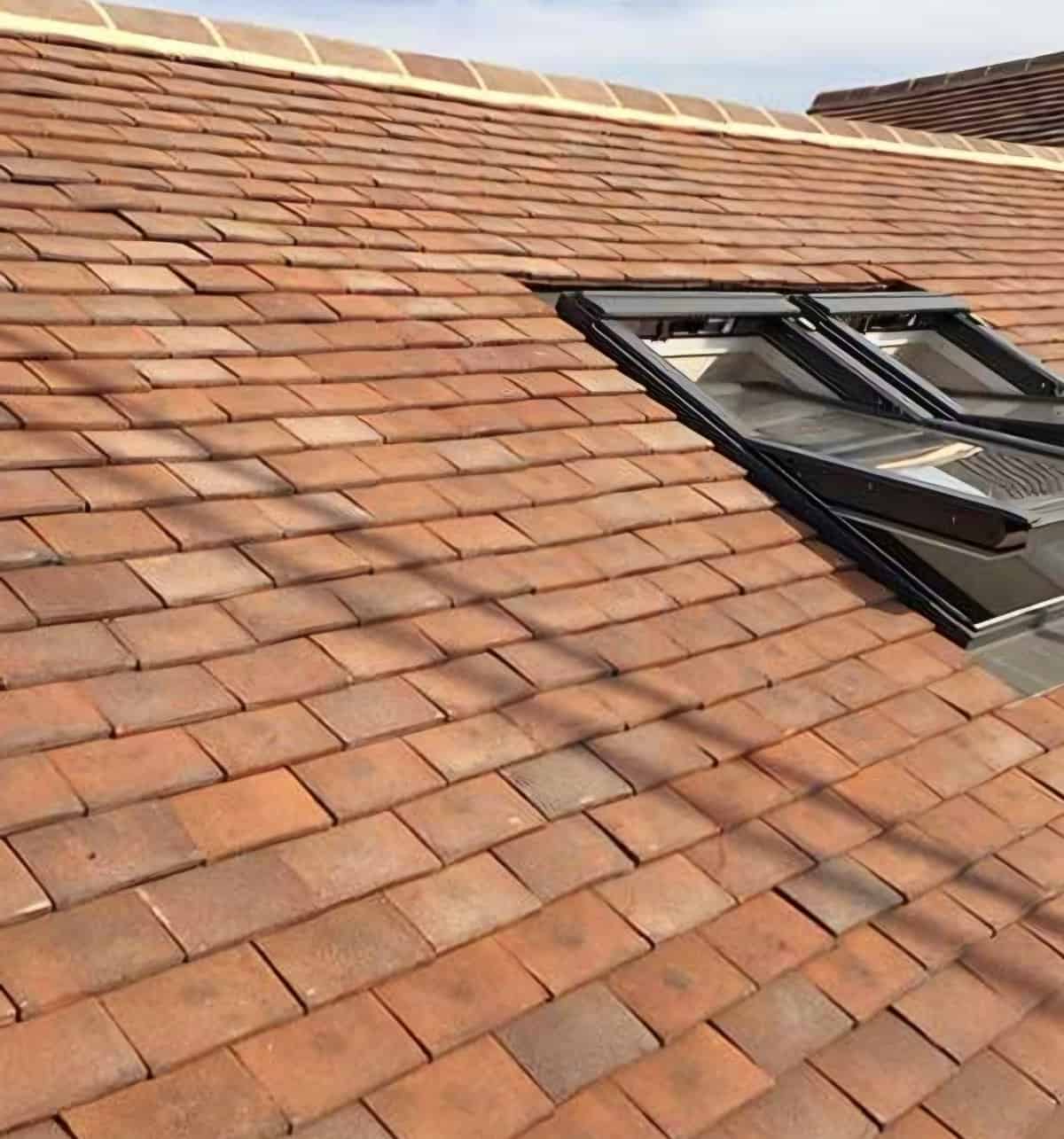
Pitched roof repairs are booked the same way whether it is a slate roof repair or a tiled roof repair. When the old mortar ridge has cracked out we fit a dry ridge system rather than buttering more sand and cement over it. Velux windows and other skylights are cut in with soakers and a flashing kit, which is what you can see on the slate and tile photos.
What is included
- Concrete interlocking tiles, plain tiles and clay
- Natural and fibre slate, with proper soakers at rooflights
- Ridges, hips, valleys, dry-fix systems and mortar
- Re-roofing with new battens and membrane, not tiles on tired felt
- Matching existing tiles where a repair should disappear
Questions on tiling and slating
Clay or concrete — which should I choose?
Concrete interlocking is the usual, cost-sensible cover for a straight Hornchurch or Romford re-roof. Clay earns its money on a house where the street is already clay and you are staying there. Slate suits older and steeper roofs. We will say which the rafters and the pitch can actually carry.