
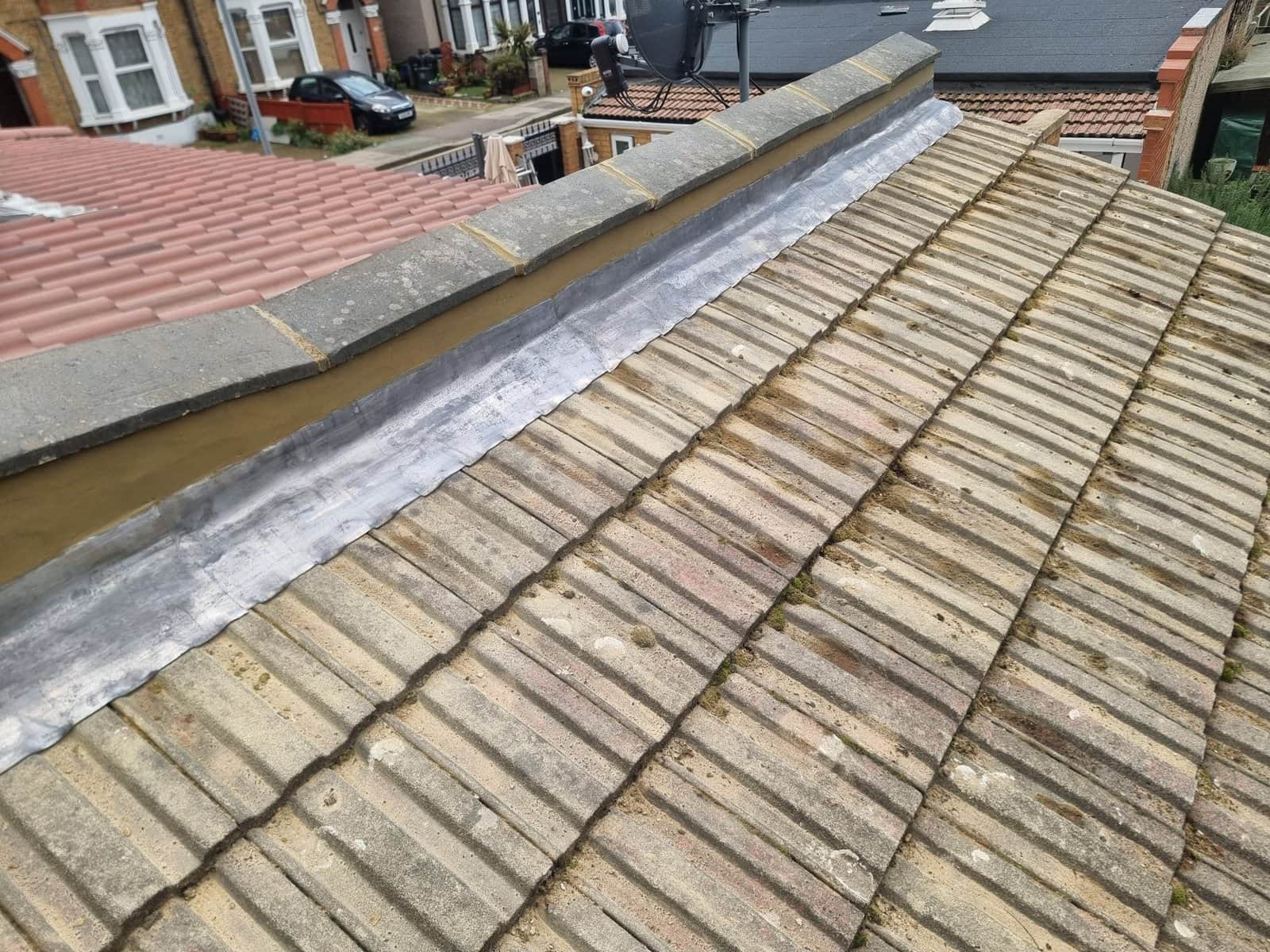
A cement fillet across the top of a bay looks tidy for a year and then cracks. Water tracks behind it, down the cavity, and into the bedroom ceiling. Lead moves with the heat and, cut to the right code and width, it stays put. The photos on this page are real parapet details on local terraces, not a stock shot of a cathedral.
We replace failed lead, we do not paint over it. Chases are cut, wedges fixed, and the pointing is done so the lead can still expand. Where a bay roof is both flat and flashed, the EPDM and the lead are detailed together so one is not dumping water under the other.
Richard Fox’s Google review is this exact job: lead flashing on an extension, done at a fair price, and he would call again. That is the standard.
What is included
- Chimney back gutters, aprons, side flashings and soakers
- Bay window roofs and dormer cheeks
- Parapet gutters and valley linings
- Expansion joints so long runs do not split
- Patination oil where the run-off would stain the tiles
Questions on leadwork
Is lead worth it versus a cheaper flashing tape?
Tape is a temporary stop on a small split. On a chimney, a bay or a parapet that sees weather every week, lead is the one that is still there in ten years. We will use tape only if you need the leak stopped today and a proper visit booked behind it.