Felt flat roofs on Hornchurch extensions usually fail the same way: the sun shrinks them, a pond sits by the outlet, and water finds the hairline split above the kitchen. EPDM is a synthetic rubber sheet. It moves with the building, shrugs off UV, and on a typical home extension it goes down in one piece.
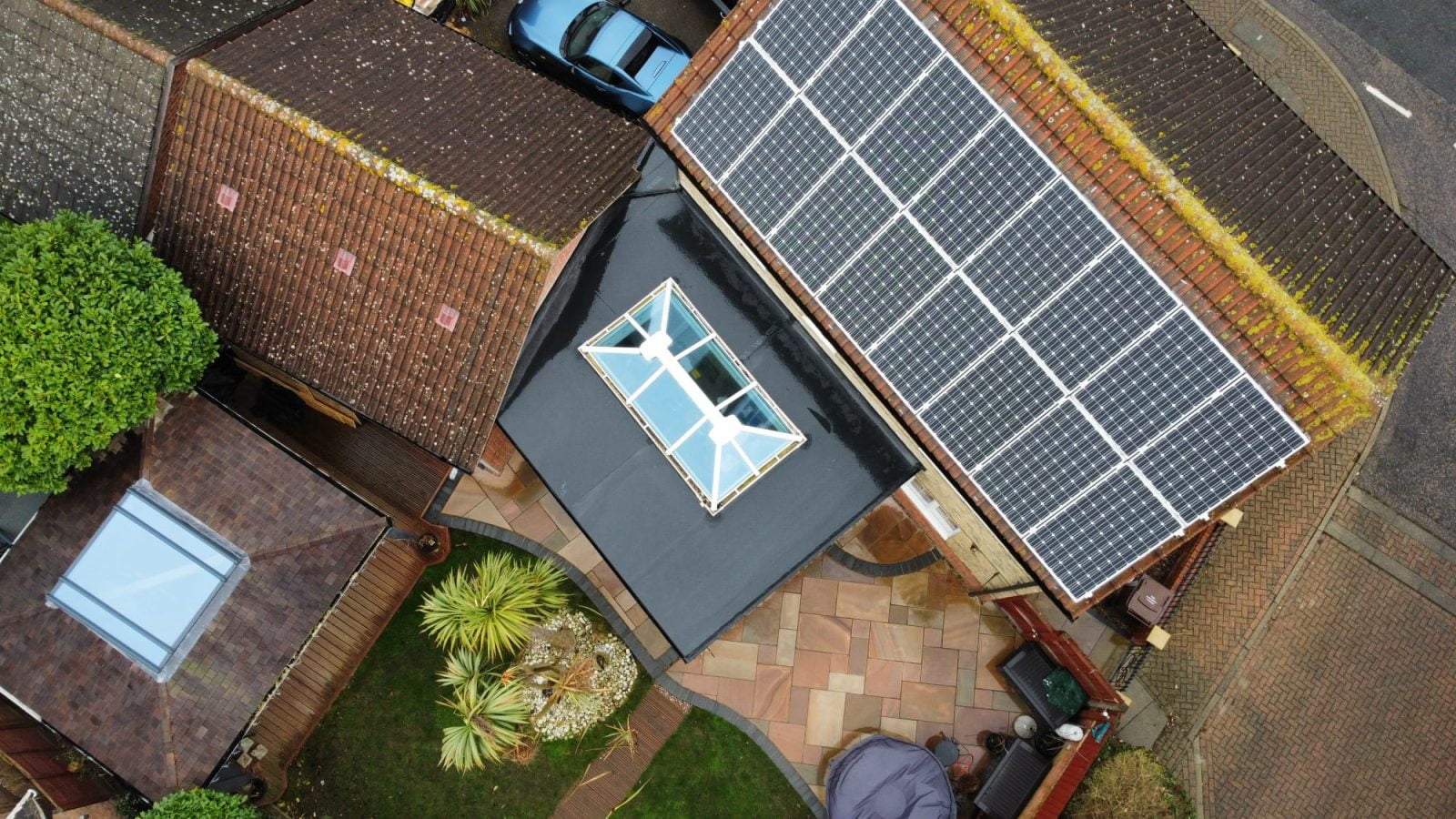
We use rubber membranes in the Firestone RubberCover class — the system our own site has specified for years — dressed up the wall, under the cavity tray where there is one, and finished with drip trims rather than a smear of mastic. Lanterns and skylights get a proper kerb, which is what you can see on the black roofs in the photos.
If the deck is spongy we say so and replace it. Laying a new membrane on rotten OSB is how the last roof failed. You get a written quote before anyone turns up with a skip, and the debris leaves with us.
What is included
- One-piece EPDM wherever the roof allows — fewer joins, fewer leaks
- Rotten chipboard and failed felt stripped, not buried
- Outlets, trims, kerbs and lanterns detailed, not just sheeted over
- Finished so an existing solar array can usually stay put
- Manufacturer warranty confirmed in writing on the quote
Questions on epdm flat roofing
How long does an EPDM roof last?
Fitted properly, a rubber flat roof is a 20-year-plus system, and the manufacturer warranty is what we put on the quote. Life depends on outlets staying clear and nobody screwing a rotary dryer through the sheet.
Can you overlay the old felt?
Sometimes, if the deck is sound and the build-up is not already too high at the door threshold. If the boards are gone, overlaying just hides the problem. We will tell you which it is when we see it.